Choosing the optimal delivery warehouse
When to use
When you need to choose the optimal warehouse to deliver cargo to.
For example:
-
When you need to pick up a parcel from a client and send it as groupage cargo to another city. After the pickup, the parcel must be taken to the optimal warehouse for further shipment, taking the other orders in the trip into account.
-
When you need to process a return. The courier picks up the goods from the client and takes them to the warehouse, where the refund decision is made after the goods are inspected.
-
When you need to choose the warehouse closest to the driver. If the choice of courier for the trip matters, the optimal warehouse depends on the distance from the warehouse to the parking place of the company transport.
Diagram
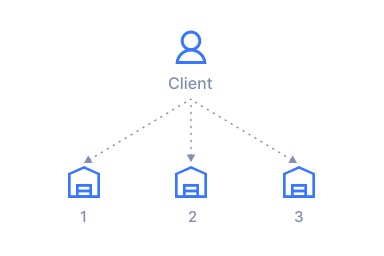
How to implement
By specifying alternative warehouses for receiving the goods. For equivalent receiving points, create different possible_events within a single order so that the planner chooses the drop point itself.
Examples
All the examples use a set of PICKUP orders, each of which has DROP delivery warehouses in different locations.
Example 1
In the diagram above, the planner selects the warehouse with the location key whs_2, because it is the closest one by mileage.
Example 2
There are two orders. The first one must be taken to a specific warehouse, the second one — to any of the offered warehouses. The route is built so that the second order is dropped at the same warehouse as the first one, because that is more efficient.
Example 3
There is one order that can be dropped at any of the available warehouses. The transport shift specifies the coordinates of the parking lot where the driver must leave the vehicle at the end of the shift. The planner selects the warehouse closest to the parking lot.